
Relationships are often analyzed through big questions: values, communication styles, attachment types, long-term goals. But sometimes, compatibility shows up in the smallest, most unexpected places—like what’s left on your plate.
Enter The Olive Theory.
Popularized by pop culture and endlessly debated online, the Olive Theory suggests that compatibility doesn’t always come from liking the same things, but from how your preferences fit together. And while it started as a playful idea, it opens the door to a deeper conversation about how differences, habits, and everyday quirks shape successful relationships.
What Is the Olive Theory?
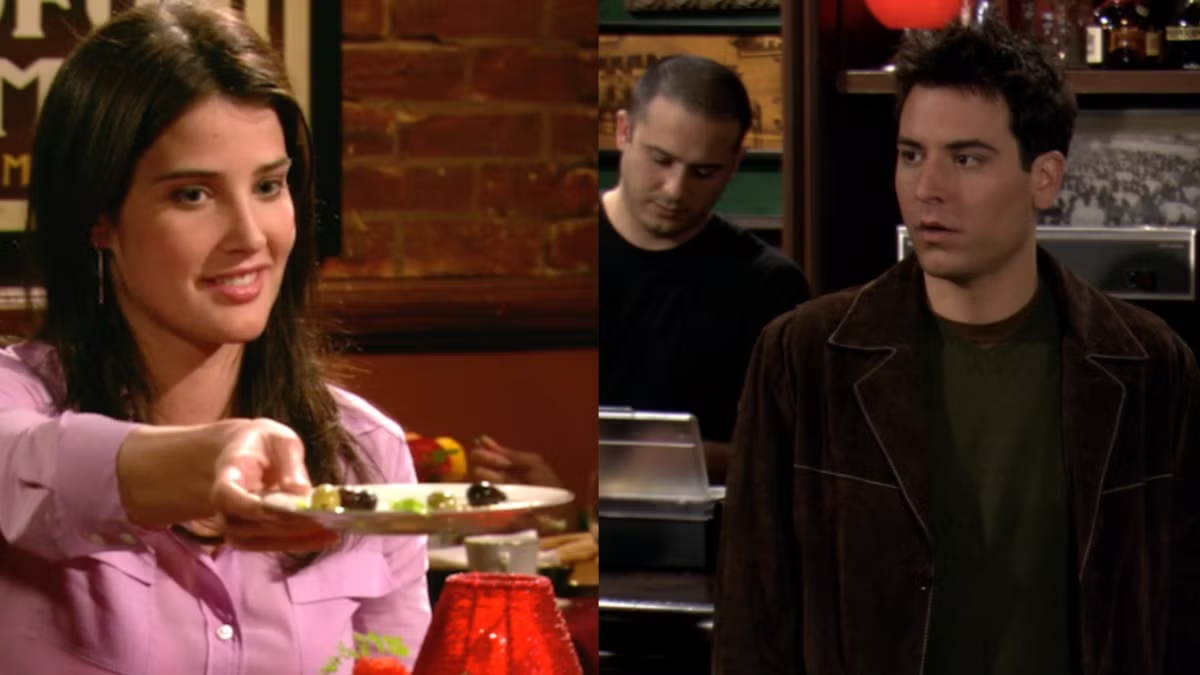
The Olive Theory comes from the TV show How I Met Your Mother. In the show, one partner loves olives, the other hates them—and that’s framed as a sign of perfect compatibility. One person happily eats all the olives, the other happily avoids them. No conflict. No compromise. Just balance.
On the surface, it’s cute and humorous. But beneath it is a simple idea:
Compatibility can come from complementary preferences, not identical ones.
In other words, you don’t have to match your partner exactly—you just have to match well.
Beyond Olives: What Pet Preferences Actually Represent
Pet preferences—likes, dislikes, habits, routines—are symbolic. They reveal how someone approaches comfort, boundaries, sharing, and difference.
When someone hates olives and another loves them, what’s really happening is:
-
One person has a clear preference
-
The other person has an equally clear boundary
-
Neither feels threatened by the difference
That dynamic matters far more than olives ever could.
Olive Theory vs “Same Taste” Compatibility
A common belief in dating is that compatibility means liking the same music, food, hobbies, or movies. While shared interests help with bonding, they’re not the strongest predictor of relationship success.
The Olive Theory points to a different truth:
-
Shared values matter more than shared tastes
-
Ease matters more than sameness
-
Harmony often comes from non-overlapping desires
If two people both need the same thing in limited supply—attention, control, reassurance, space—that’s where friction often starts.
What Pet Preferences Reveal About a Relationship
1. How You Handle Differences
Do you argue over small dislikes, or do you shrug and adjust? A couple that can say “Cool, more for you” is showing emotional flexibility.
2. Power and Control Dynamics
If one partner insists their preference should always dominate—food choices, routines, plans—that’s not olive theory compatibility. That’s imbalance.
3. Comfort With Autonomy
Being okay with your partner liking (or hating) something you don’t share shows comfort with individuality. That’s a green flag.
4. Everyday Negotiation Skills
Long-term relationships aren’t made of grand gestures—they’re built on daily micro-negotiations. Who picks the movie? Who gets the armrest? Who eats the olives?
When the Olive Theory Works—and When It Doesn’t
The Olive Theory works best when:
-
Preferences are low-stakes
-
Both partners feel respected
-
There’s no resentment attached to the difference
It fails when:
-
Differences touch core values (ethics, money, boundaries)
-
One person constantly sacrifices while the other benefits
-
“Complementary” becomes code for emotional imbalance
Not everything should be solved by “you take this, I’ll take that.” Some things require alignment, not division.
Olive Theory and Emotional Compatibility
In a deeper sense, the Olive Theory can also apply emotionally.
For example:
-
One partner processes emotions internally, the other talks them out
-
One partner plans ahead, the other lives spontaneously
-
One partner needs reassurance, the other expresses love through actions
These differences can either complement each other—or clash—depending on communication and mutual respect.
The theory isn’t about opposites attracting blindly. It’s about differences that reduce friction rather than create it.
Is the Olive Theory a Real Measure of Compatibility?
On its own? No.
But as a metaphor? Absolutely.
It reminds us that:
-
Compatibility isn’t perfection
-
Love isn’t about mirroring
-
Peace often comes from fitting together, not matching exactly
A relationship where both people love olives isn’t doomed. And one where both hate them isn’t magically superior. What matters is how people navigate preference, difference, and everyday coexistence.
Final Thoughts
The Olive Theory endures because it captures something deeply human: the desire for ease. We want relationships where small things don’t turn into battles, where difference doesn’t feel like a threat, and where love shows up in simple, unforced ways.
Whether it’s olives, pets, playlists, or weekend routines, compatibility often reveals itself not in what you both want—but in how gracefully you make space for what you don’t.
And sometimes, the healthiest sign of a good match is looking at your plate, pushing the olives aside, and knowing someone else will happily take them.